Driver Compliance & DOT Compliance
Navigating the Rise in Non-Domiciled CDL Enforcement: What Carriers Need to Know
June 15, 2026
7 min read

The trucking industry is seeing increased attention from regulators regarding non-domiciled Commercial Driver’s Licenses (CDLs).
The Federal Motor Carrier Safety Administration (FMCSA) has recently emphasized enforcement efforts surrounding non-domiciled CDL holders as part of a broader safety and fraud prevention initiative. For motor carriers, this push is not just about licensing — it is also closely tied to driver qualification files, drug and alcohol testing programs, and overall DOT compliance. Understanding what a non-domiciled CDL is, why FMCSA is focusing on it, and how carriers can protect themselves from compliance risk is essential.
What Is a Non-Domiciled CDL?
A non-domiciled CDL is a Commercial Driver’s License issued to an individual who is not legally domiciled in the United States but is authorized to work in the country.
These licenses are typically issued to drivers who:
- Have legal authorization to work in the U.S.
- Do not maintain permanent residency
- Hold valid immigration documentation allowing employment
Instead of a standard state CDL, these drivers receive a non-domiciled CDL designation, which allows them to operate commercial motor vehicles in interstate commerce. The purpose of this licensing category is to ensure that drivers who are legally allowed to work but do not reside permanently in the U.S. can still be properly licensed and regulated.
Why FMCSA Is Focusing on Non-Domiciled CDL Holders?
Some states have issued large numbers of non-domiciled CDLs, which raised concerns at the federal level about whether all licensing requirements and driver verification processes were properly followed. As a result, regulators have begun reviewing how these licenses are issued and how motor carriers are hiring drivers who hold them.
The FMCSA has recently increased attention on non-domiciled CDL programs due to concerns involving:
- Fraudulent licensing practices
- Inconsistent state oversight
- Identity verification challenges
- Unqualified drivers entering the industry
Driving the Enforcement Push
The FMCSA’s primary mission is to reduce crashes, injuries, and fatalities involving commercial motor vehicles. When questions arise about driver qualifications or licensing practices, enforcement typically increases.
Several concerns have driven the current focus on non-domiciled CDLs:
- Identity Verification: Ensuring the driver’s identity and eligibility to work in the U.S. is critical for licensing and safety oversight.
- Training Standards: Drivers must meet the same training and testing requirements as any other CDL holder, including Entry-Level Driver Training (ELDT) requirements.
- Record Verification: Regulators want to ensure that drivers with non-domiciled licenses have accurate driving histories and verifiable records.
- Compliance Oversight: Motor carriers must verify that drivers are properly qualified before allowing them to operate commercial vehicles.
What Motor Carriers Need to Verify When Hiring Non-Domiciled CDL Drivers
Hiring drivers with non-domiciled CDLs is allowed, but carriers must ensure all standard FMCSA compliance requirements are followed. This includes verifying the same documentation required for any CDL driver.
Key verification steps include:
- Confirming the driver holds a valid CDL issued by a state DMV
- Ensuring the driver has a valid medical examiner’s certificate
- Completing a pre-employment DOT drug test
- Running a Clearinghouse query
- Reviewing the driver’s motor vehicle record (MVR)
- Establishing a complete Driver Qualification File (DQF)
Failing to properly verify these requirements can expose carriers to compliance violations during audits or roadside inspections.
Driver Qualification Files Are Critical
The Driver Qualification File (DQF) is one of the most important compliance components when hiring any CDL driver — including those with non-domiciled licenses.
A properly maintained DQF must include:
- Driver employment application
- Motor vehicle records from each state
- Road test or CDL equivalent verification
- Medical examiner certificate
- Annual MVR review
- Annual driver certification of violations
These documents confirm that the driver meets all federal qualification requirements under 49 CFR Part 391. Incomplete or missing files are among the most common violations discovered during FMCSA audits.
The Role of Drug and Alcohol Testing Compliance
Another critical component of hiring CDL drivers is compliance with DOT drug and alcohol testing regulations under 49 CFR Part 40 and 49 CFR Part 382.
Motor carriers must ensure every CDL driver:
- Completes a pre-employment DOT drug test
- Is enrolled in a random testing program
- Is subject to post-accident testing requirements
- Can be tested for reasonable suspicion when necessary
- Is included in the company’s drug and alcohol policy
Additionally, the driver must be queried in the FMCSA Drug & Alcohol Clearinghouse before performing safety-sensitive functions.
Failure to complete these steps before allowing a driver to operate a commercial vehicle is a serious compliance violation.
Why Compliance Risk Is Increasing?
With increased scrutiny around non-domiciled CDLs, regulators are placing greater emphasis on carrier responsibility for verifying driver qualifications. Motor carriers cannot assume that licensing alone guarantees compliance.
Common issues that lead to violations include:
- Missing pre-employment drug tests
- Incomplete driver qualification files
- Failure to run Clearinghouse queries
- Missing annual MVR reviews
- Improper documentation of driver records
During a DOT audit or safety investigation, these issues can lead to:
- Monetary penalties
- Conditional safety ratings
- Increased regulatory oversight
This is why many carriers rely on compliance partners to ensure their programs are properly managed.
How Compliance Providers Help Motor Carriers
Many transportation companies partner with compliance specialists to help manage their regulatory responsibilities.
Compliance providers assist carriers with:
- Consortium random drug and alcohol testing programs
- Driver qualification file management
- Clearinghouse compliance and reporting
- Motor vehicle record monitoring
- DOT policy development
- Supervisor reasonable suspicion training
- Audit preparation and regulatory guidance
These services help ensure that carriers maintain proper documentation and remain compliant with federal safety regulations. For companies hiring drivers with non-domiciled CDLs, this additional oversight can be particularly valuable.
How Carriers Can Protect Themselves
Motor carriers can reduce compliance risk by implementing strong hiring and verification procedures.
Recommended best practices include:
- Conducting thorough driver qualification file reviews
- Verifying all CDL credentials with state licensing agencies
- Maintaining strict drug and alcohol testing compliance
- Running Clearinghouse queries before hiring
- Implementing internal compliance audits
Working with experienced compliance professionals can also help ensure that regulatory requirements are consistently followed.
Preparing for Increased Enforcement
The FMCSA’s focus on non-domiciled CDLs signals a broader trend toward increased regulatory oversight in the trucking industry. Carriers that prioritize compliance and maintain accurate documentation will be best positioned to avoid enforcement actions and operate successfully. As regulations evolve, proactive compliance management will remain a key part of running a safe and legally compliant transportation operation.
Preparing for the Future of DOT Compliance
The current safety push surrounding non-domiciled CDLs highlights a larger reality within the transportation industry: regulatory scrutiny is increasing.
Motor carriers must ensure their compliance programs extend beyond licensing to include:
- Drug and alcohol testing programs
- Driver qualification file management
- Clearinghouse compliance
- Ongoing driver monitoring
By maintaining strong compliance systems and partnering with knowledgeable experts, carriers can protect their operations and remain prepared for regulatory changes.
Rely on a True Partner for Your DOT Compliance
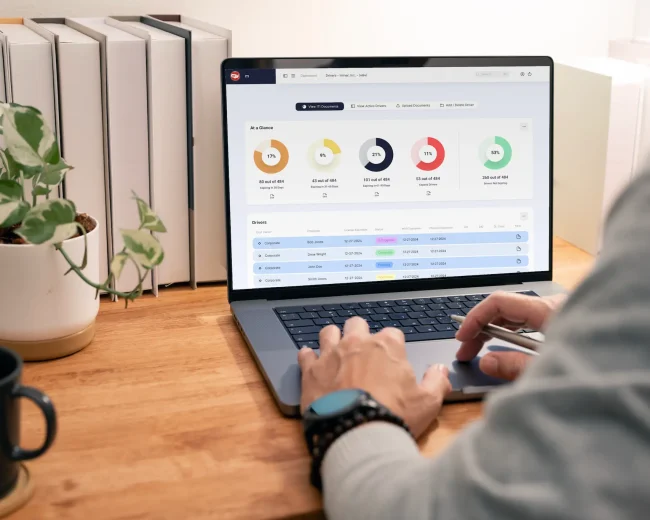
Navigating the shifting landscape of FMCSA regulations and heightened non-domiciled CDL scrutiny doesn’t have to break your operations. At ITI, we do the heavy lifting for you, operating as a seamless extension of your safety team. From automated driver qualification file (DQF) generation and motor vehicle record (MVR) monitoring to managing 100% compliant online applications and random drug and alcohol testing programs, our secure portal gives you 24/7 visibility and total peace of mind.
Don’t wait for a DOT audit to find the gaps in your files. Contact the compliance and safety experts at ITI today to schedule a consultation or request a demo.
Related Articles
Driver Compliance & DOT Compliance
THC Rescheduling: What It Means (and Doesn’t Mean) for DOT-Regulated Employers
There’s been a lot of attention recently to the federal government’s proposal to reschedule marijuana many employers and…

Driver Compliance & DOT Compliance
DOT Audit Trends: What Carriers Need to Know
Audits conducted by the Federal Motor Carrier Safety Administration (FMCSA) are becoming more data-driven, targeted, and detailed than…